

Early in the 2000s it looked like the bad guys would win. The hackers. The black hats. Only they weren’t so bad — not the nameless, faceless, dark web nation state existential dread we face today, but kids messing around with code, trying to impress a girl, trying to make their way in the world.
They sure did a lot of damage though.
I got stuck in the middle of it and it was utter and complete chaos — the onslaught of worms, viruses and malware was nonstop, and the tools we needed to fight them didn’t exist. Melissa, SQL Slammer, Code Red, Nimda, Blaster and of course … ILOVEYOU.
Then there were the guys who saw the wave — saw the opportunity — fashioned their white hats, grabbed a surfboard and rode that wave. While they promised to save us all from the scourge — they made out like bandits.
Still, it ended badly for many of them.
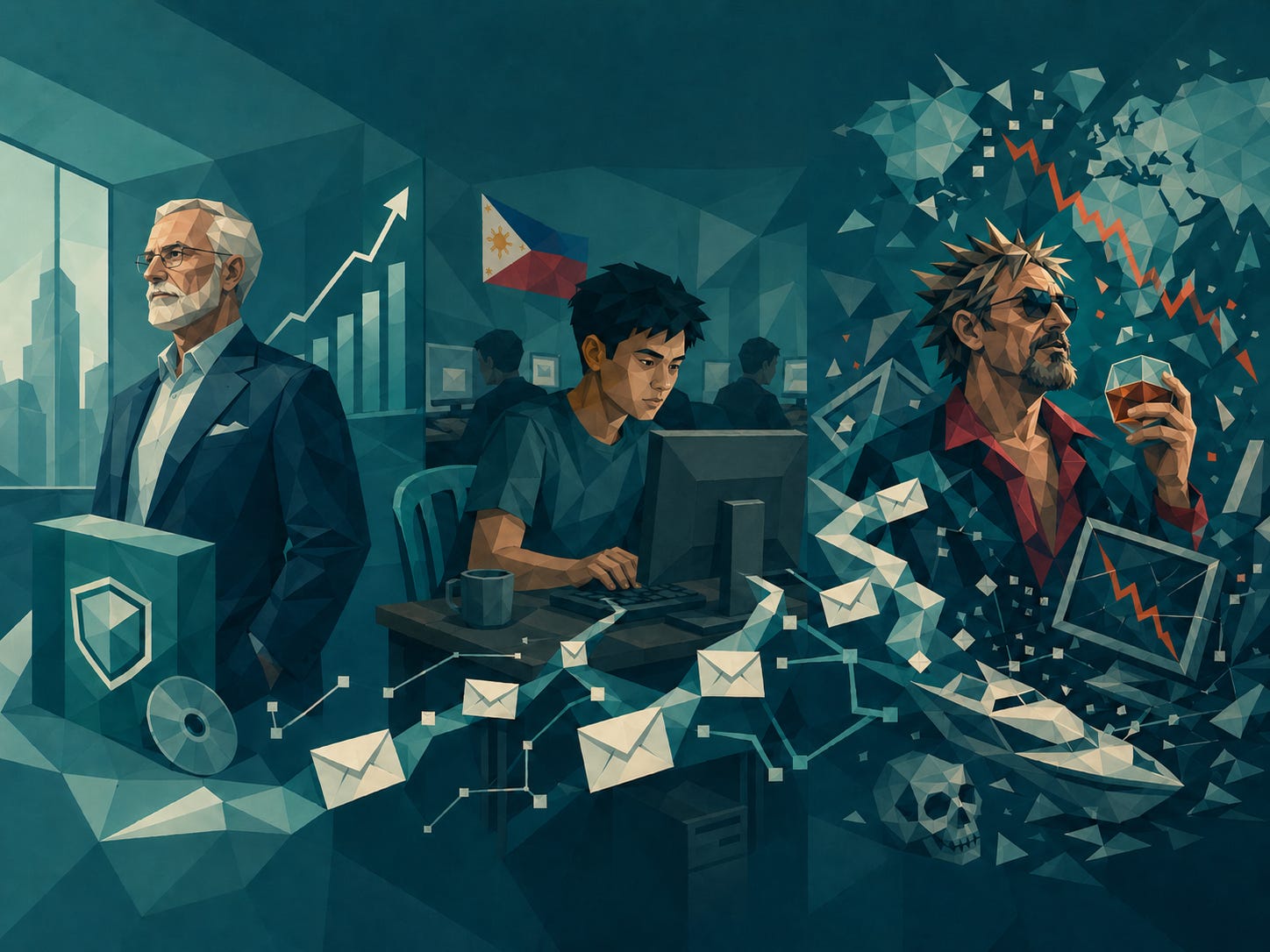
My gig back then was building massive corporate email systems. Custom systems built up around a product called Microsoft Exchange. Exchange 5.5 had built up a loyal corporate following and the new release — Exchange 2000 — would go on to become the cornerstone of Microsoft’s enterprise collaboration business.
PCs had blown up and they were on every desk, in every classroom, every warehouse. The mantra was make it faster, make it easier, make the components and the software easier to use.
Security was an afterthought, an annoyance, something that slowed down the pace of releases.
ILOVEYOU took advantage. A few lines of Visual Basic written by a frustrated college student in the Philippines, took down the Pentagon, the FBI, the UK Government, and AT&T.
Here’s the guy that wrote it - Onel de Guzman.
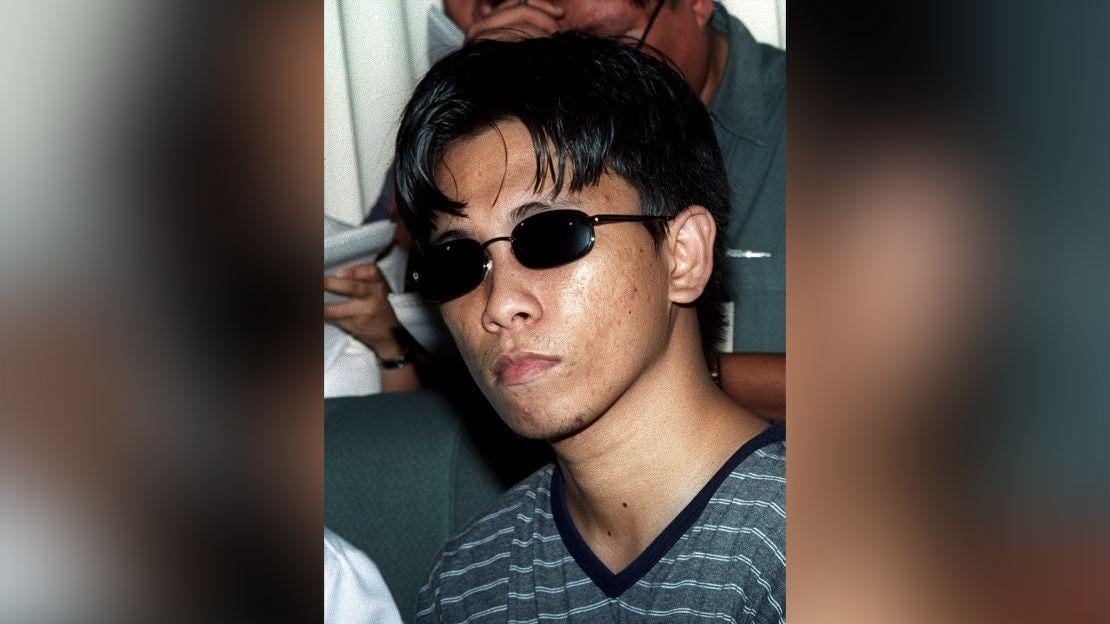
Onel’s college professor threw him and his thesis project to steal passwords out of school. Unethical he said. Frustrated, Onel went home and wrote up the code. He couldn’t afford internet access outside of school and this one trick was going to get him a stash of dial-up credentials to keep going.
He attached his creation to an email, typed a line to a friend in Singapore, hit send, and went out to get dinner.
SUBJECT: ILOVEYOU
kindly check the attached LOVE LETTER coming from me
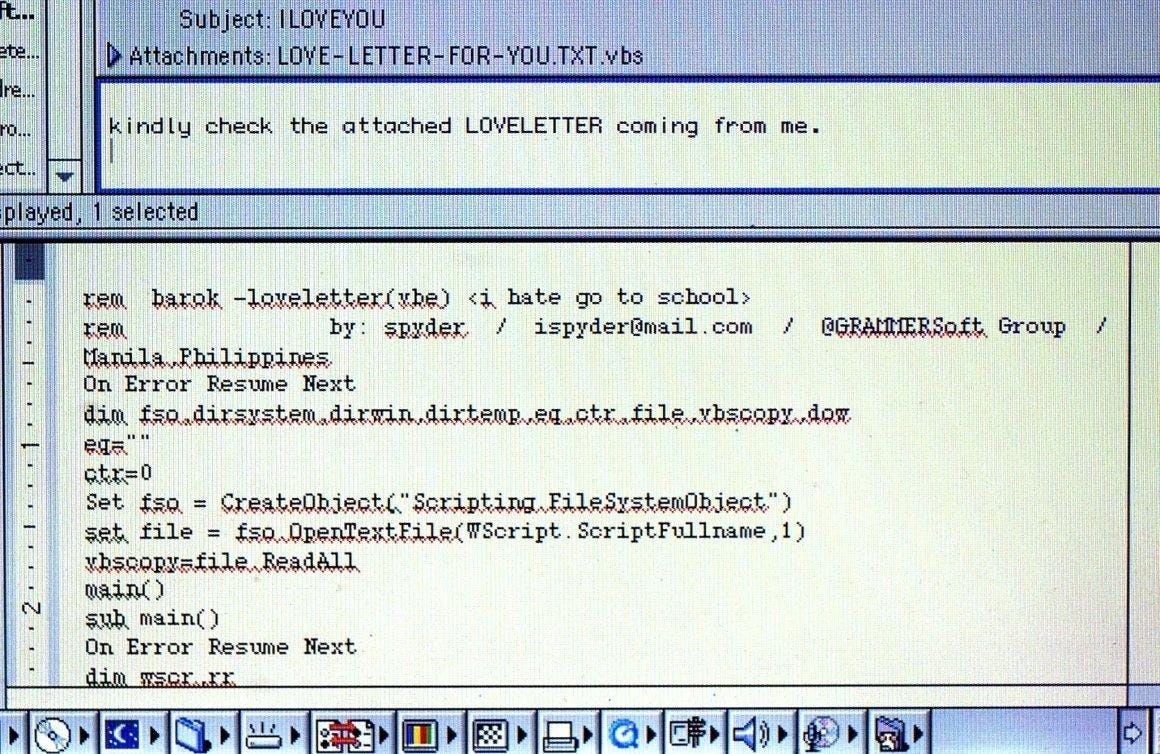
That one email spawned a global crisis. In 10 days ILOVEYOU took over computers around the world, leaving behind a trail of destruction. 45 million infecting computers, hundreds of millions of deleted files, tens of millions of stolen passwords. ILOVEYOU scraped so many credentials, the email accounts de Guzman sent them too became hopelessly backed up and inaccessible within hours of that first email.
Antivirus software was nascent at the time — there were no techniques to counter a zero-day attack like this.
Clicking on the love letter (which appeared to be a simple text file, thanks Windows)1 not only grabbed cached passwords, it replaced every picture with a copy of itself and then mailed itself to everyone in your address book. Who can resist reading a love letter from someone you know?
Exchange couldn’t keep up with the mail volume. The only solution was to take down every server, purge the mail queues and manually patch every infected computer before bringing the servers back up. On a large system this took days. I worked some long nights.
Onel later said:
I figured out that many people want a boyfriend, they want each other, they want love, so I called it that.
Peter Norton and John McAfee had established their tech business’ before ILOVEYOU. Norton came from a comfortable family in Seattle, and after getting laid off by the aerospace industry, he became a buddhist monk in San Francisco.
Then, he accidentally deleted a file on his computer. Rather than anger, Peter choose the path of the buddha and instead of recreating the whole file, he wrote a program that recovered it. Then he wrote a few more system programs. He started dropping into computer user groups and Norton Utilities was born. Norton Antivirus came soon after. Business was good; ILOVEYOU made it exponentially better.
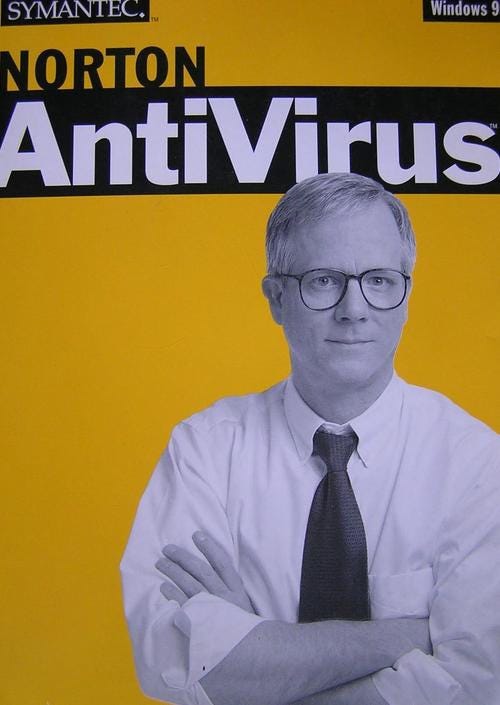
There was a time when you couldn’t walk into a computer store without seeing shelf after shelf of yellow boxes with this picture of Peter on it. Norton AV was what you bought to protect your grandma’s PC from the Onel’s of the world.

John McAfee’s origin story is rougher. Born on a US Army base in England to an American father and British mother, his dad abused him and his mom, eventually committing suicide.
John got his degree in mathematics and bounced around as a programmer in the defense industry including time at NASA. When someone showed him one of the first viruses on a floppy disk — he saw opportunity. It’s all just software.
John wasn’t the safe choice like Peter - McAfee weaponized viruses; he sold fear. McAfee AV was the only thing that could save you from the scourge of software coming for you.
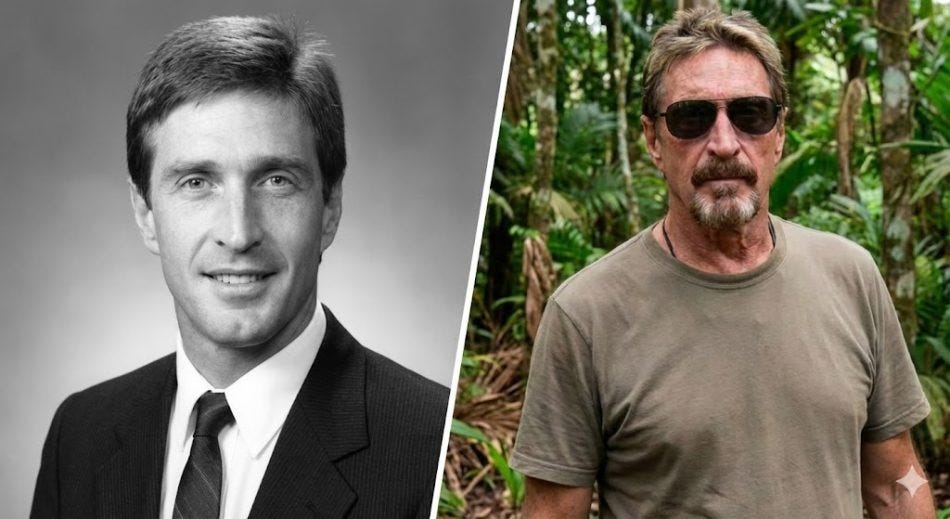
Like Norton, ILOVEYOU was a gift to John McAfee. McAfee and Norton Antivirus traded places as the #1 and #2 AV companies, minting money in the process.
In January 2002, Bill Gates realized the scope of the problem and slammed on the brakes, pulling 13,000 Windows engineers off feature work to focus 100% on security. Every developer in the company underwent rigorous security training. I spent a week up in Redmond deep in it myself.
Peter, John and Onel’s malware wave ran out of steam as each new version of Windows shipped with a lot less bugs and a lot more security baked in. With AV built into Windows, the market for standalone AV software evaporated — bad news for Peter and John’s companies. 2
But Peter and John were smart — they both cashed out early. Peter left at the top of his game with 70 million, becoming a philanthropist, art collector, and building his dream home on cape cod. While his face kept selling product, he never looked back.
He’s still kicking.
McAfee left a few years after Peter with $100 million — he would later call McAfee’s software ‘the worst on the planet.’
But John did not go quietly and collect art — he moved to Belize, living a life surrounded by big dogs, drugs, guns, and murder. His behavior became increasingly erratic and paranoid. His neighbor poisoned his dogs; his neighbor was found executed. Fleeing Belize from the murder charge, he returned to the US, embracing crypto while mocking the IRS saying he would never pay taxes.
There’s a ton of media on John if you’re curious; this video he made is a glimpse of the madman.
He’s dead.
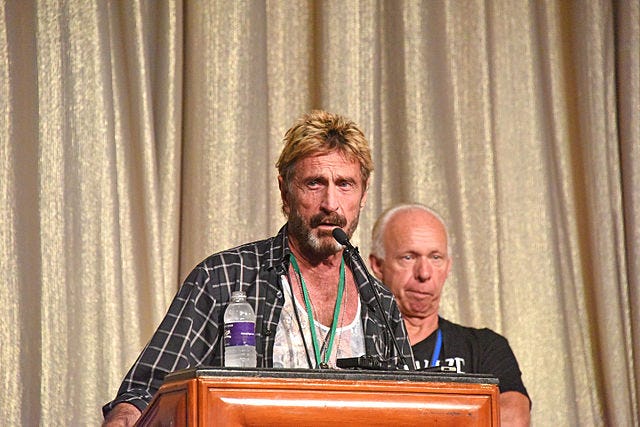
The IRS caught up with John and he fled the US, living off his mega yacht with his third wife, four guard dogs, seven staff and two security guards. He was made land in Europe and was arrested in Spain, charged with tax evasion, money laundering and fraud. He died of suicide in 2021 at age 75. The day the Spanish Court ordered his extradition back to the US to face charges.
What about Onel? It wasn’t hard to trace ILOVEYOU back to him. His email and hacker handle headlined the code. But the Phillipine’s had not written any cybercrime laws yet and he walked. However, the attention was too much for him and he disappeared.
A reporter caught up with him a few years ago — now he fixes phone screens in a kiosk in a Manilla mall.
Who would you choose - the Monk, the Misfit or the Madman? No one wants to be Onel. Opportunity wasted. I choose Peter. Leave at the top; live your best life. When I told my HS kids this story, a lot of them wanted to be like … John.
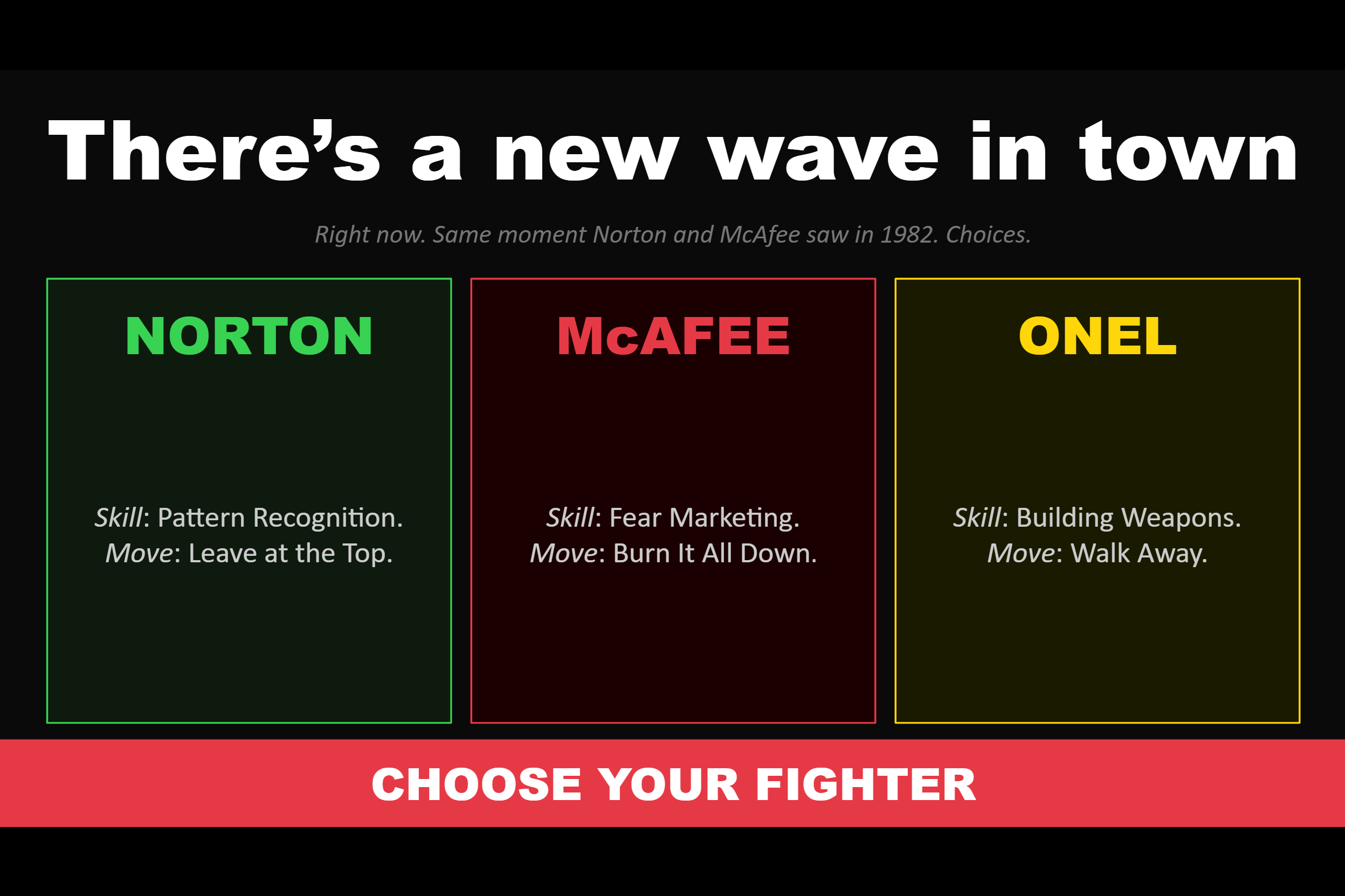
Here we are in a new wave. Who are the Peter’s and John’s and Onel’s in today’s AI wave? There’s plenty of characters to choose from. Sam Altman, head of OpenAI and Dario Amodei, head of Anthropic are easy picks. Neither is a Monk; both may be Madmen.
The closest we’ve got to Onel (so far) is Australian Vibe coder Peter Steinberger — creator of OpenClaw. I wrote about the recent riot Peter caused across the globe in Agent Smith. But unlike Onel, Peter played a smart game, landing a cush gig at OpenAI along with a fat paycheck.
But we’ve only just begun. Millions are out there hacking away at AI as you read this — everyone looking for their moment. Keep your eyes peeled — we won’t see this wave for what it is until we’re looking back.
Windows XP hid file extensions to make them appear friendlier. Onel named his worm ILOVEYOU.TXT.vbs knowing in Windows it would show as just the innocuous ILOVEYOU.TXT with the .vbs extension indicating it was a Visual Basic Script hidden.
Peter sold Norton to Symantec. When the market for AV software crashed, Symantec panicked and jumped into the adjacent website security business, acquiring Verisign’s certificate authority for over $1B. They mucked it up so bad that Google blacklisted them and they had to sell the whole business in a fire sale at a big loss. McAfee floundered, eventually selling their entire business to Intel.
Watched the McAfee documentary on Netflix and somehow it was even more unhinged than the version in your head before you saw it. The man was running for president from a yacht in international waters with seven staff and four guard dogs while live-tweeting at the IRS. There's no screenwriter alive who could pitch that and not get laughed out of the room.
This was a super fun read, Andrew.
Storytelling is 10/10
Happy Friday!
Awesome job with this story! You really made it fun.