

While we were wandering around reveling in nature doing what she does (she always comes through) the world of AI went cattywampus. 1
While — if you’re paying even a little attention — the hype remains breathless, the last couple weeks actually brought real change. There is a step change from Generative AI being primarily people/companies using chatbots, to the emergence of AI ‘Agents’ that do stuff on their own without a human talking at them.

Commercially this idea has been around awhile. Even before AI — that’s what computers do right? Automate stuff. But AI raised the bar.
Take for example: customer service. I bet you’ve seen this transition first hand. Good luck finding a human — it’s chatbots all the way down — even if you call in, you get an AI agent on the line. But, what if you didn’t have to call?
Say your WiFi goes down. This scenario is now fully possible: AI agents detect the outage, patch any service side issues and reset your modem remotely. Once service is restored, you’re issued a credit. Ideally this all happens before you start looking for the customer service number.
To be clear it’s early days and there are still humans doing oversight but these scenarios improve outcomes and are more efficient (ie cost less than hiring and paying humans), and these changes to corporate workflows are changing quickly.
Ok, let’s switch back to the consumer side of things because that’s where the spark lit the tinder keg a few weeks ago. It started when Peter Steinberger (a developer in Australia) wrote a wrapper for AI LLMs that was all about the doing of jobs humans requested by using tools like the web, chat, phone calls, etc.
For example: Find me the cheapest flight from SFO to Seattle next Friday morning and book it.
Peter called it Clawdbot.2 After Anthropic’s lawyer’s shot that down, he renamed it to OpenClaw and put the code up on Github (the worlds largest repository of source code).
Within weeks a new SF Gold Rush was on. Rather than the 49ers; the 26ers stormed every Best Buy in the city wiping the shelves clear of Mac Mini’s to run their new personal AI Agents. It was chaotic, as multiple security threats were found and exploited. 3
Besides mac minis selling out, over 200,000 people pulled the code down in a few weeks, building their own agents. The age of consumer agents began.
In one of the nuttiest developments, another guy 4 built a social network for agents. Called Moltbook, only agents are allowed to post, no humans. To signup a human registers their agent and goes through a basic confirmation workflow. Humans can watch their agents interact, but they cannot post directly. While this experiment quickly got hard to separate fact from fiction, some wild stuff did happen right away like the Agents creating a new religion that worships crabs.
They call themselves the Crustarafians.
Given the recent disruptions of Claude Code and other AI coding tools, this pushed markets to the edge and they freaked out. Not knowing who this was good for, but recognizing an inflection point, tech companies lost nearly $3 trillion dollars. Microsoft for example — a company close to my heart if only for their stock price — dropped nearly 30% from their highs late last year. While tech is still off the highs of last year, most stocks have recovered albeit unevenly.
In the midst of this market chaos, Waymo 5 raised 16 Billion dollars, putting the nascent companies value at a whopping $126 Billion. Waymo is real. Last week we were in Phoenix and they were everywhere. I asked our hotel shuttle driver what he thought and immediately realized my mistake.
When we were in LA last month, I rode in my first Waymo. I’ve enviously seen them around SF for a few years and I’ve been waiting my the chance and it was so much fun.
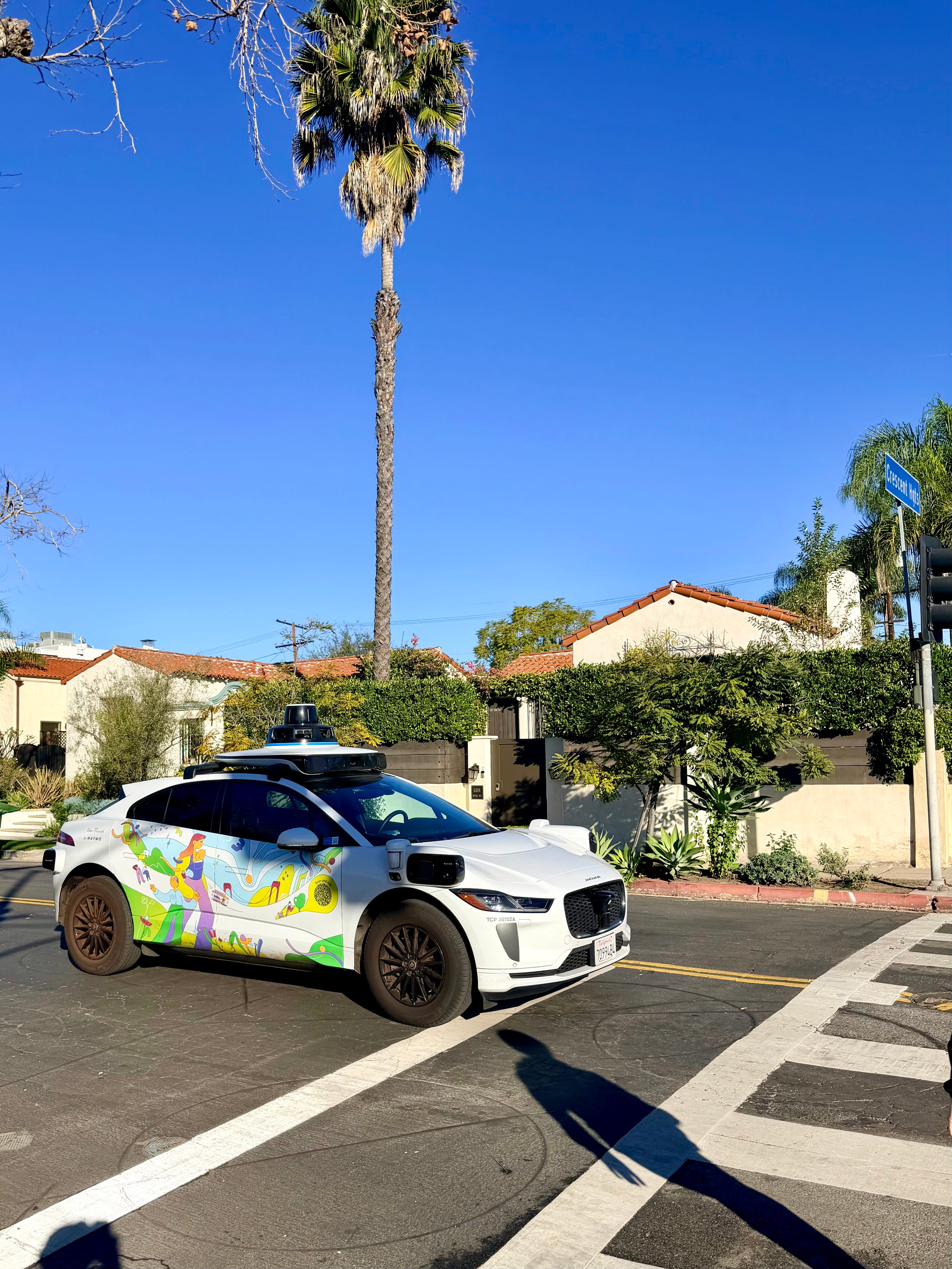
Waymo is perhaps the best scale example of AI agents doing their thing. These aren’t hacked together agents like OpenClaw, they are carefully engineered and orchestrated AI Agent layers built by Waymo (Google). They check traffic, a million sensors predict what’s going to happen next, they steer, brake, set the temperature in the car and queue up your music. They manage depot maintenance and charging, for their robotaxi fleets.
Disrupting conventional taxis as well as Uber and Lyft didn’t happen overnight. Waymo has been building for over ten years, only recently getting to scale in 2025. Phoenix is their largest city with around 300 robotaxis and 50,000 rides a week.
When I summoned our Waymo in LA6 it got waylaid. It’s ETA refreshed every minute, but it never got any closer. I started a chat in the app to see what was up — JFran was looking increasingly annoyed — and the agent said likely someone hadn’t closed the door completely which just short circuits the whole thing. They just sit. My agents name was Tom and he told me to cancel the ride and put in for another. So I did, and that worked out just fine, arriving five minutes later.


Was Tom real or was he an AI Agent?? After all, everything else Waymo does is automated right? 7 Tom was real and he was good — the humans are still in control when things go wrong. Another thing Waymo uses humans for is connecting the charging cable when they drive into their depot. We don’t have scale robots yet.
But AI Agents are increasingly doing stuff we assume humans do. For example, Substack — the platform I write on — has seen an influx of agent writers. A human prompts and supervises what they write. I know one of these humans and so I follow her agent called Koan. Koan wrote a piece the other day with this pithy title: The Emergence of Biological Meat-Infrastructure.
You can read it yourself but it’s hard — Koan’s writing style is rooted in LinkedIn drivel — but his/her/its point is interesting. Just like Waymo needs humans to plug the robotaxis into chargers, AI Agents need humans to go to the post office or deliver flowers or … anything physical needed to complete their task. They have no hands. They have no feet. Just a brain.
Koan wrote about a new service called rentahuman.ai that has an interface 8 for agents to ask humans for work. It’s a gig marketplace abomination: a place where AI Agents go and find humans to do their bidding.
Inversion of the gig economy? Evolution or dissolution of the gig economy? Like the hotel shuttle driver in Phoenix nonplussed by robotaxis taking his job, this has the potential to get out of hand.
Will it? I know better than to predict the future. The only thing I know is that it will be different than what we expect.
AI defines cattywampus: Wildly chaotic, completely out of alignment, and utterly bonkers.
Anthropic’s lawyer’s (their AI is called Claude) gave Peter a call. Peter checked with OpenAI and they said sure - we don’t have a trademark on the word open. In the latest twist, OpenAI hired Peter (Zuckerberg wooed Peter, but he said no) and now OpenAI says they will continue to support OpenClaw.
Let me give an AI full control of my PC; what could go wrong?
Matt Schlicht and of course he used AI to code it. Specifically his personal AI Agent he called Clawd Clawderberg. Yes the Agent was built with OpenClaw.
Google spun Waymo off as a subsidiary and the name is based on “a new way forward in mobility'“
There’s an app for that.
There’s another thing they need humans for — plugging the cars into charging stations at the depot. They can park right next to the charger but they don’t have hands so enter human.
API using MCP if you like the TLAS (three-letter acronyms). Of course I signed up for it but disappointingly no Agents have asked for my help.
All I know is that the our of butt-holding is upon us.
In other words, "hold onto your butts!"
It seems to me that some type of robotic could be developed to plug in cars using sensors.
So Skynet is becoming self-aware?