

Back when I was working 40, 50, 60 hour weeks (during COVID it felt like 80) I didn’t have this newfangled AI around to help me out. 1 I wrote my own emails, attended my own meetings, refactored my own spreadsheets.
I did research the old fashioned way — I googled it. Drowning in a sea of blue links — it was the worst.
Now that I’m working 10 hours a week teaching High School (my first couple weeks felt like 80) I have all of the AI and I love it.
It’s saving me and my students.
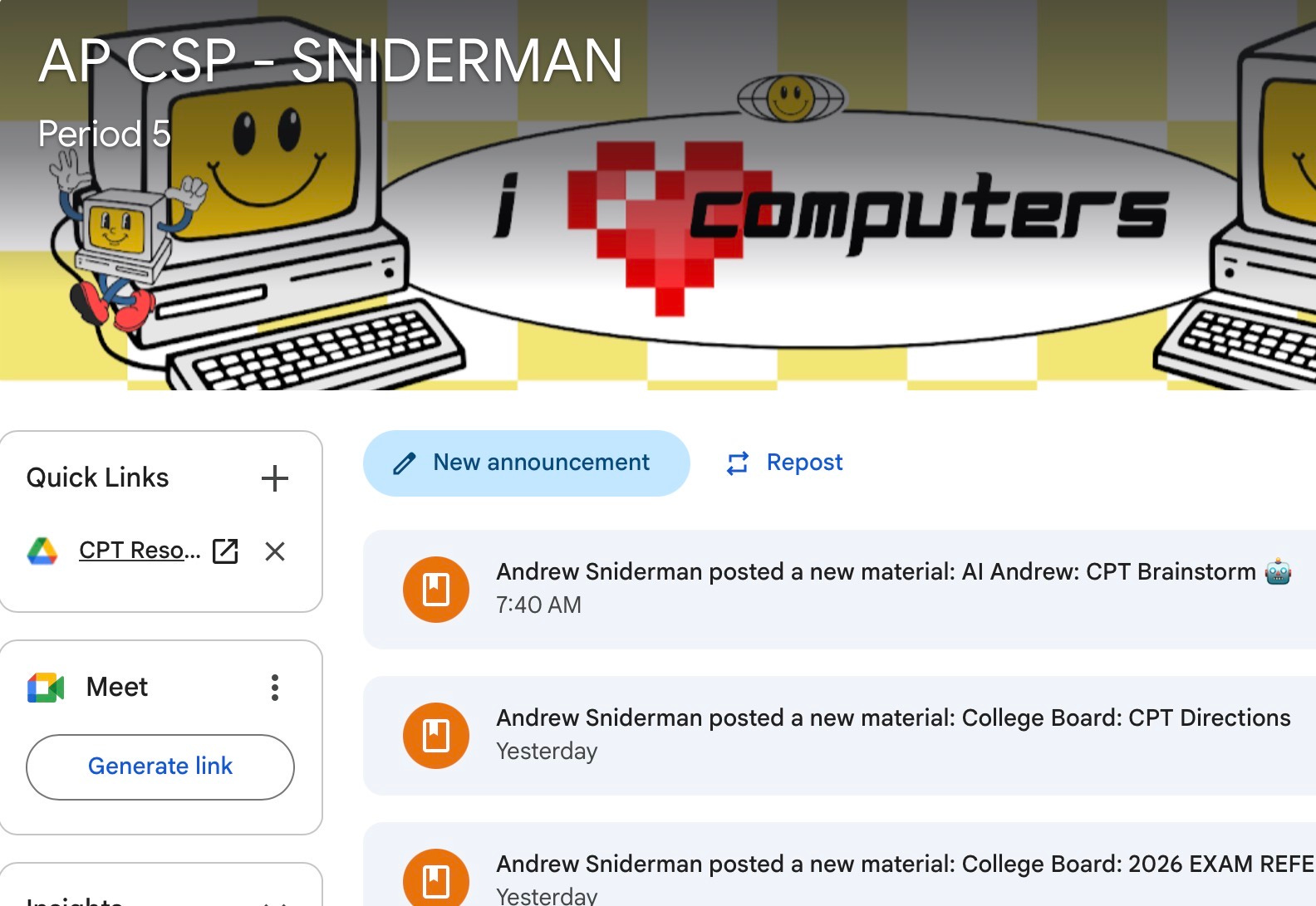
I handed out assessments the first day I went in. I looked them over after class — it was grim. Their teacher left at Christmas and the subsequent parade of subs just had them do self study — ineffective for all but the most motivated high schooler.
Then there’s the AP test. You take an AP class in high school so you can take the test and it’s more than about getting college credit — it shows potential colleges you’re ready for that level of work — assuming you pass.
For reasons I don’t understand, the AP test is in May - nearly a month before school is over. For AP CSP there’s another hurdle — they must code and upload a program ahead of the test and that’s due in April!
So I knew I was going to be under the gun. What I didn’t know was what tools the school would have to help me.
Education has a testy relationship with technology. When word processors replaced typewriters — well there goes spelling and editing and penmanship. And let’s not forget the great copy-paste plagiarism scourge of the 2000s.
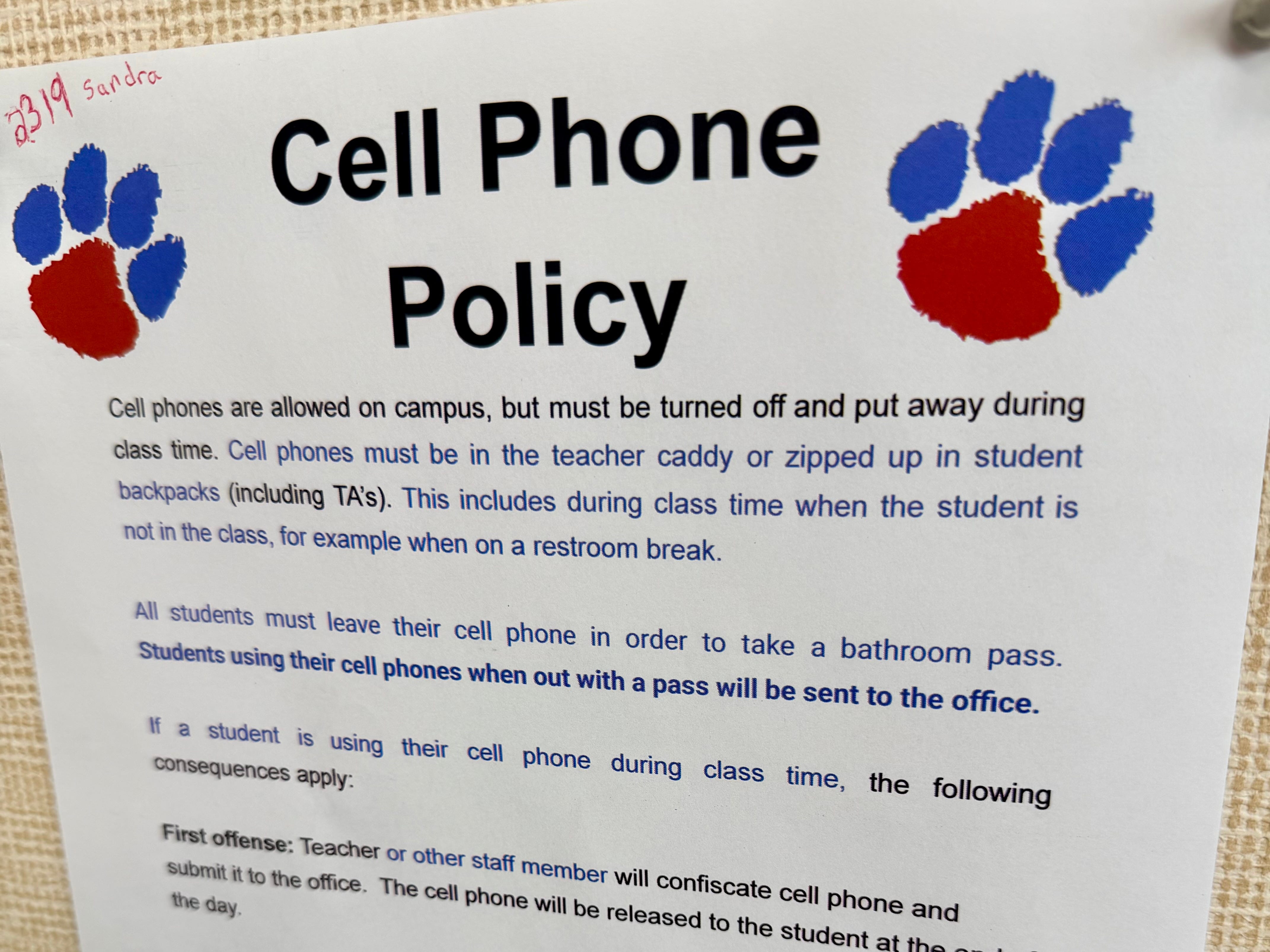
Today it’s the cell phones messing with our kid’s minds. This one is more about attention and mental health versus teaching — and for sure it’s tricky.
AI is different. From the start, it had the potential to be the best study buddy and unlike the concerted backlash to control plagiarism back in the 2000’s, chat based AI tools have grown so quickly that schools had to figure out how to use them versus banning them.
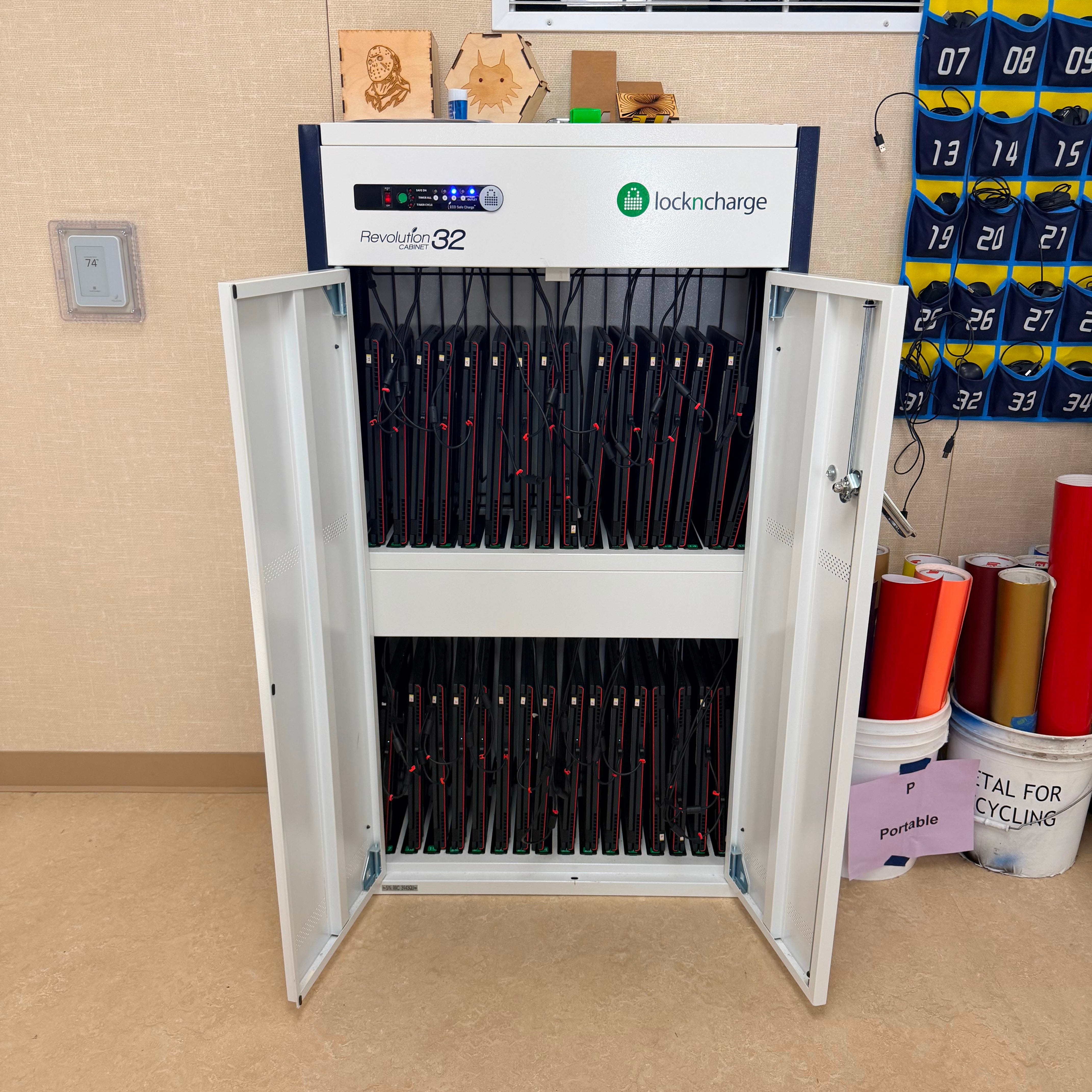
The pandemic is really behind this shift — that’s when every teacher and student had to get online. Before COVID, around a quarter of schools used online systems and today every single public school does. Google Classroom alone saw usage quadruple from 40M pre-pandemic to over 150M now.2
That’s the world I’m teaching in today as I try to get my twenty kids back on track and ready to pass the AP exam in a short two months.
The first thing I did after I accepted the gig was try to figure out the curriculum the College Board dictated for this course. What did I have to teach them so every one could pass the AP Test? I put together — no lie — 50 slides to parse it all out for them and reset the class.
Putting aside my mistake in overestimating the attention span of a 16 year old 3 — half of the slides I pulled were how not to use AI.
Some of this is fair and a plagiarism concern. After all, AI spits out code like it’s nothing, and you’re not learning anything if AI writes your program for you.
However, AI is eating up the software industry at a frightening pace, so not only do these kids need to learn AI yesterday, it’s the perfect tool to accelerate 6 months worth of learning into 2 months time.
I’m lucky this school uses Google Classroom. Initially Google lagged getting into the AI race — they didn’t want to cannibalize their search monopoly with the pages of blue links. But exponential growth cannot be ignored and so when the threat shifted to being left out of a new age, Google went all-in. That was about a year ago and now Google has a complete suite of AI tools under the product name Gemini.
Google Classroom gets everything Gemini has to offer:
In late 2024 Google had a viral AI moment when people discovered a product they were experimenting with called NotebookLM. I fed it an article I’d written and I was amazed when it took the 8,000 characters I wrote and turned them into an entertaining 8 minute podcast.
NotebookLM has become the top AI tool in education. It’s especially popular in colleges and universities. Why? Because unlike a chatbot that pulls info from god-knows-where including occasionally just making stuff up (hallucinations), NotebookLM is scoped to a specific set of sources (up to 300) you define.
The college board publishes this document for my class and it’s 300 pages long:
AP Computer Science Principles: Course and Exam Description.
I’m here for the kids, but I’m not reading that.
But NotebookLM can — no problem. I built a notebook for my class that not only uses that doc as a primary source but also every other relevant doc from the College Board (dozens — they are nothing if not prolific at documenting) for over 500 pages of content including sample exams, prior year questions, rubrics for the coding assignment, etc.
I call it: The Exam Vault.
NotebookLM can convert its sources into a bunch of teaching resources including flash cards, infographics and practice tests. In addition to audio podcasts, it now creates video lessons as well.
I asked it to make a two minute video of the perfect coding project for the exam and my students were mesmerized. I will be making more videos:
Once I built The Vault, I could activate my AI army. I spun up a set of helper chatbots to get my kids through the coding assignment with the looming due date. It’s worth 30% of their test score. 4
Each bot has a personality and a job. First there’s AI Andrew — it’s a friendly brainstorming buddy for kids that get stuck trying to come up with a program. It’ll riff on their ideas and suggest new ones while making sure they have a structure that meets all the exam requirements and is doable in the limited time we have.
Real Andrew is the final approver before they can start to code.
Once they start coding, next is the AI Auditor — it’s a strict enforcer that checks if their code meets all the byzantine requirements of the AP test.
Once they’re code complete, the last one is the AI Simulator which is a proctor — albeit a friendly one that tells dad jokes — that simulates the written section of the exam where they have to explain the code they’ve written against the clock.
So far AI Auditor is a hit — it’s the perfect companion to check how their code is coming along. I’ve explicitly prevented any of these bots from providing code or even helping the kids write or re-write theirs. They have to do that on their own.
These should be a life saver, but I’m continually surprised by this class. Teaching high school is oh so different than teaching adults.

On Monday I switched it up; I want the kids to engage more. This was after consultation with my HS motivation coach — that’s my niece — she’s a sophomore in Oakland. On her advice, I brought in a bag of Starburst candies. When one of my seniors actually came up with the right answer I got so excited that I grabbed the bag and tossed him one.
His buddy, propped up nonchalantly on the stool next to him lurched for the Starburst, tipped over and crashed out on the floor. Very dramatic. Also entertaining. He looked very sheepish and was quieter than normal the rest of the class, but perhaps I should reconsider this tactic.
Maybe my AI study buddies will work better than Starbursts?
AI has been cooking since the 90’s but we mostly called it machine learning and it was R&D in labs similar to how quantum is today. Before I retired we were getting close to productizing it at scale. Cool features built on ML / AI showed up in all our demos and decks. Real-time translation, summarization, prediction — customers loved the vision but it took several years (after I’d retired) to actually get them in scale products.
COVID also put a permanent dent in attendance which is still hurting public schools nationwide. You might have seen how Los Angeles Unified is in hot water, putting their superintendent on paid leave after squandering millions on an AI based system that was supposed to improve attendance.
I limit my lecture time to 20 minutes at the beginning of class now. Things are much better.
Google calls these Gems and I have defined mine to never provide code in their answers.
This is great. Although nothing builds character like writing MergeSort in C on an exam paper.
Simultaneously makes me wish I was back in school and also very glad I had about a decade of writing code before the AI showed up.
I love this, Andrew. Here's why.
So often AI is framed as either a threat or a magic shortcut, but you’re showing a middle path - scaffolding students’ learning while keeping them accountable.
Happy Friday!