

This week the AI industry is pushing ambient agents.
It’s gotta nice ring, but what’s ambient even mean?
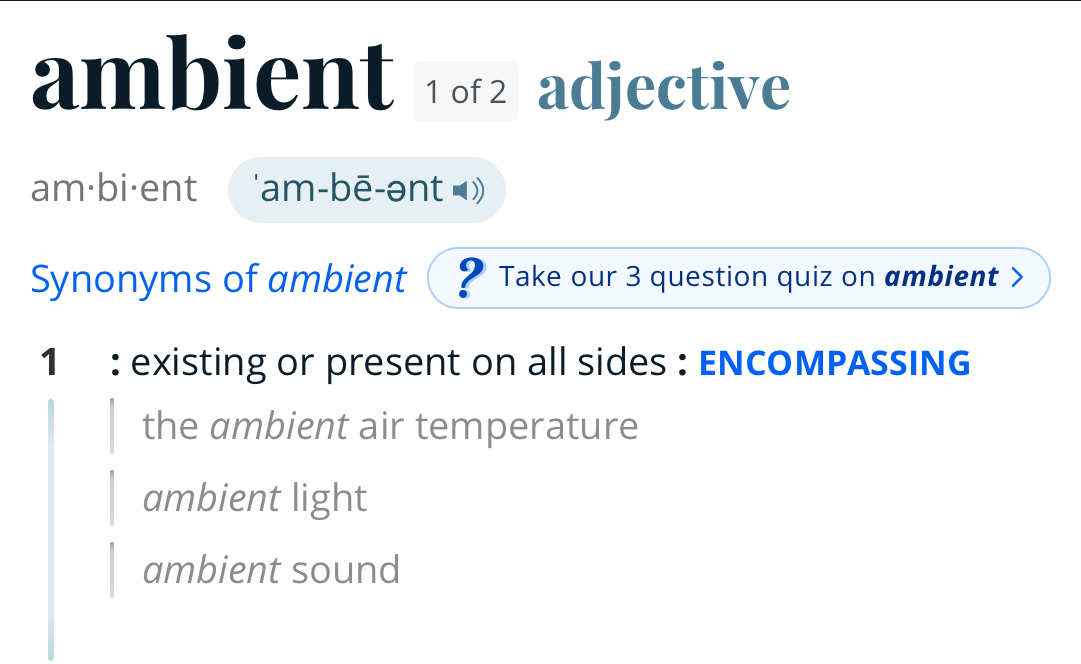
So — waving my arms around at everything — the agents are everywhere now?
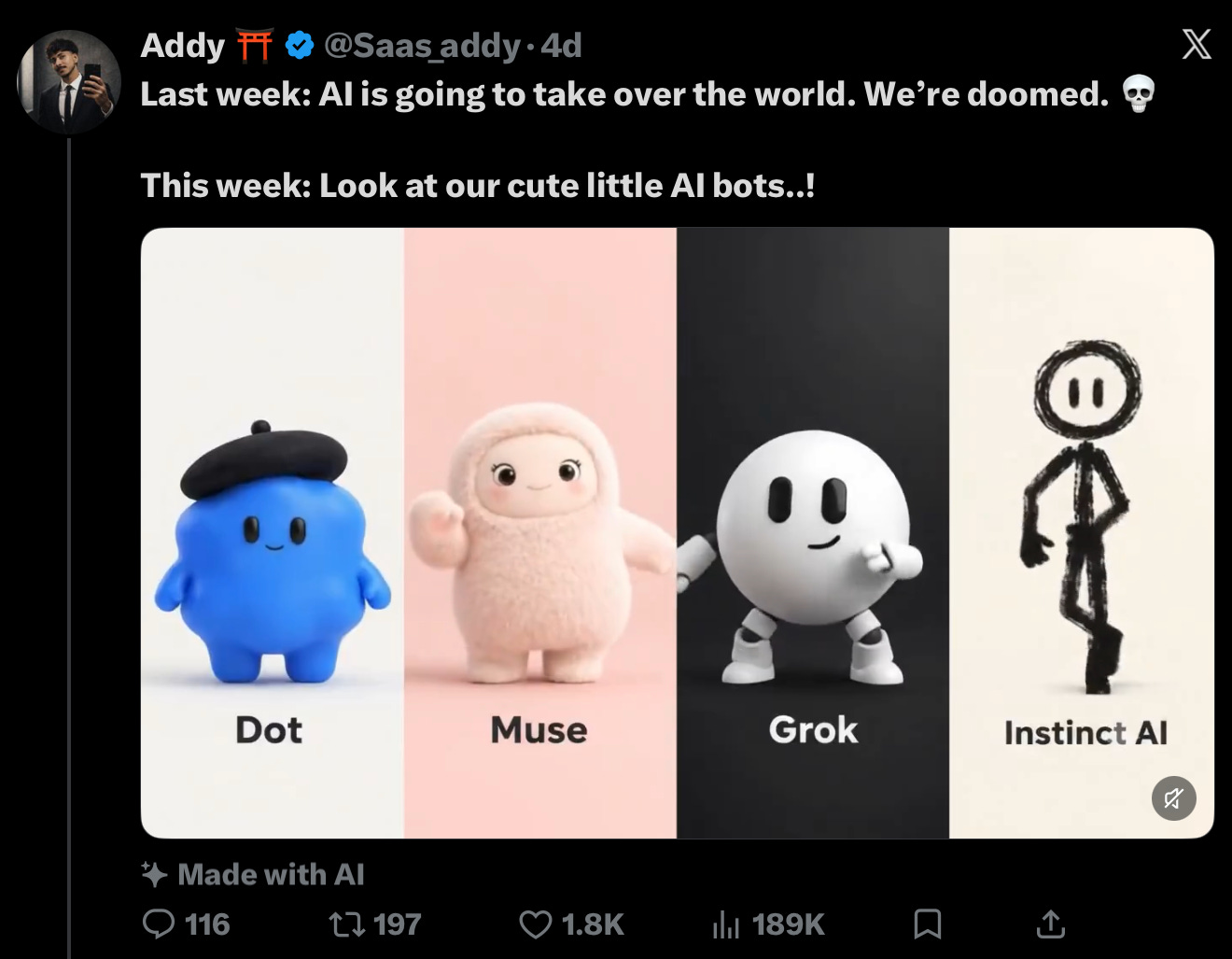
For an industry rebranding on cuteness (beats last month’s AI that’s coming to kill us all) I’m not sure that’s the vibe they’re after. But most people — like me — will just think it sounds cool.
So many words, so many languages, so many origins — it creates the organic, spiraling swirl that drives every human interaction. There’s an artistry to both the written and spoken word. When I sit down to write my 1,000 words for the week I have so many choices to fill the page.
That’s the foundational magic of AI: it understands our words. It speaks our language.
Two years ago I wrote about how this came to be and I remain amazed:

If we’re being generous, Computer Science as a discipline is around 100 years old. Written language is over 5,000 years old. Spoken language is over 100,000 years old.
So, the new field borrows old words.

Bug. Where it all started. You’ve heard the story — back when computers were cavernous rooms filled with vacuum tubes, actual bugs would gunk up the circuits.
Look up bug on Merriam Webster and this comes right after insects:
An unexpected defect, fault, flaw, or imperfection
Bugs might have been the first animal to get drafted into the computer lexicon but they weren’t the last: we got the mouse, we got worms (early computer malware), python the programming language and my favorite: spiders that crawl the WWW 🕷️
Then there’s the engineering-speak favored by software engineers who just want their grandma to believe they’re actually building a real thing rather than a wispy amorphous ambient … something … that lives in the clouds.
Words like: platform, base, substrate, layers, fabric, scaffolding, stack, pipeline, foundation.
Lots of math terms make it into CS lingo and this is much more understandable since math and CS are adjacent fields. Words like: tangential, orthogonal, vector, exponential.
Algorithm.
It’s all romantic and metaphorical and I love the wordplay.
It beats acronyms, they suck.
TLAs, or three letter acronyms, are one thing: MIT, FBI, IBM — those are practically word status and recognizable.
It gets messy at four letters: SWAT, NASA, NATO — and then quickly devolves into techno gobbledegook like HTML, JPEG, SMTP.
A while ago I was working on Microsoft’s very first corporate chat products and we (engineering + marketing) came up with this awful acronym: CEBP.
At least SWAT is pronounceable. CEBP stood for: Communications Enabled Business Processes.
I often think about it, because it was the future and now we’re living it. Chat is ubiquitous on our phones, on every web page and every app. And now it’s not just to communicate with humans.
Book a ticket, buy groceries, open a support case, renew your insurance. All through text communications. That’s CEBP. It took a new wave of tech to get here.
These ambient agents are meant to go even further and act without you specifically requesting it. Pay your bills every month, buy your weekly groceries, book the anniversary dinner on your calendar.
Who knows if this iteration sticks but in this moment, that’s where we’re headed. I’m deeply suspicious of scaled consumer tech, so I’m whatever about it. You have to be besties with Mark Zuckerberg as only John Ward is, to trust Muse … err Meta with your email and bank accounts.
Getting back to the language thing — not only does AI make you conversant in every language on the planet, but also every programming language.
Yesterday I specced out a script for a client to update her catalog with a new product line. It’s a WordPress site and so I needed to use a programming language called PHP that sends the stuff a browser needs to render a webpage. 1
I’ve never written a line of PHP in my life. But I knew what I wanted, what needed to be changed, how to test it, etc. So I sat back while ChatGPT generated nearly 2,000 lines of code.
It didn’t work right away. But after a couple of hours of chatting back and forth and testing and tweaking and optimizing, it was 2,000 lines of working code.
Getting computers to repeatedly do that one weird thing you need is now possible for anyone.
But now there’s this weird collision. We don’t have the vocabulary to describe these machines we now talk to and that talk back. We describe them like they are human.
They aren’t.
It starts with the word ‘Agent’ and how we’re describing what they do and how they act: relentlessly goal-focused, cheating, forming teams, sacrificing themselves, worrying about being caught.
Replace the word Agent with, say, your best frenemy Aaron and they’re interchangeable.
We named computers after bugs, clouds and platforms. But now that the agents are talking back, we’re at a loss for words.
HTML, another surprisingly recognizable 4 letter acronym.