

When a guy I used to work for retired, we gave him a giant portrait.
Except it was a photomosaic — that’s a picture made up of a bunch of other pictures. From across the room it just looked like a portrait of him, but as you got closer it dissolved into hundreds of pictures of him doing various things with various people at Microsoft over the course of his career.
The individual images appeared like magic.
I thought that was pretty cool and I always wondered how you could make such a thing.
Turns out it’s easy, because computers.
The idea is simple. Take the original picture and divide it up into a grid. Sample the color and brightness of every piece of the grid. Then go through your library of photos and pick the one that matches each square the best.
This type of algorithm is called nearest neighbor and it’s a pattern you find everywhere. ‘More like this’ in Netflix? Nearest neighbor. ‘You might also like’ in Amazon? Nearest neighbor. ‘All the Selfies of Andrew’ in your phone’s gallery? Nearest neighbor.
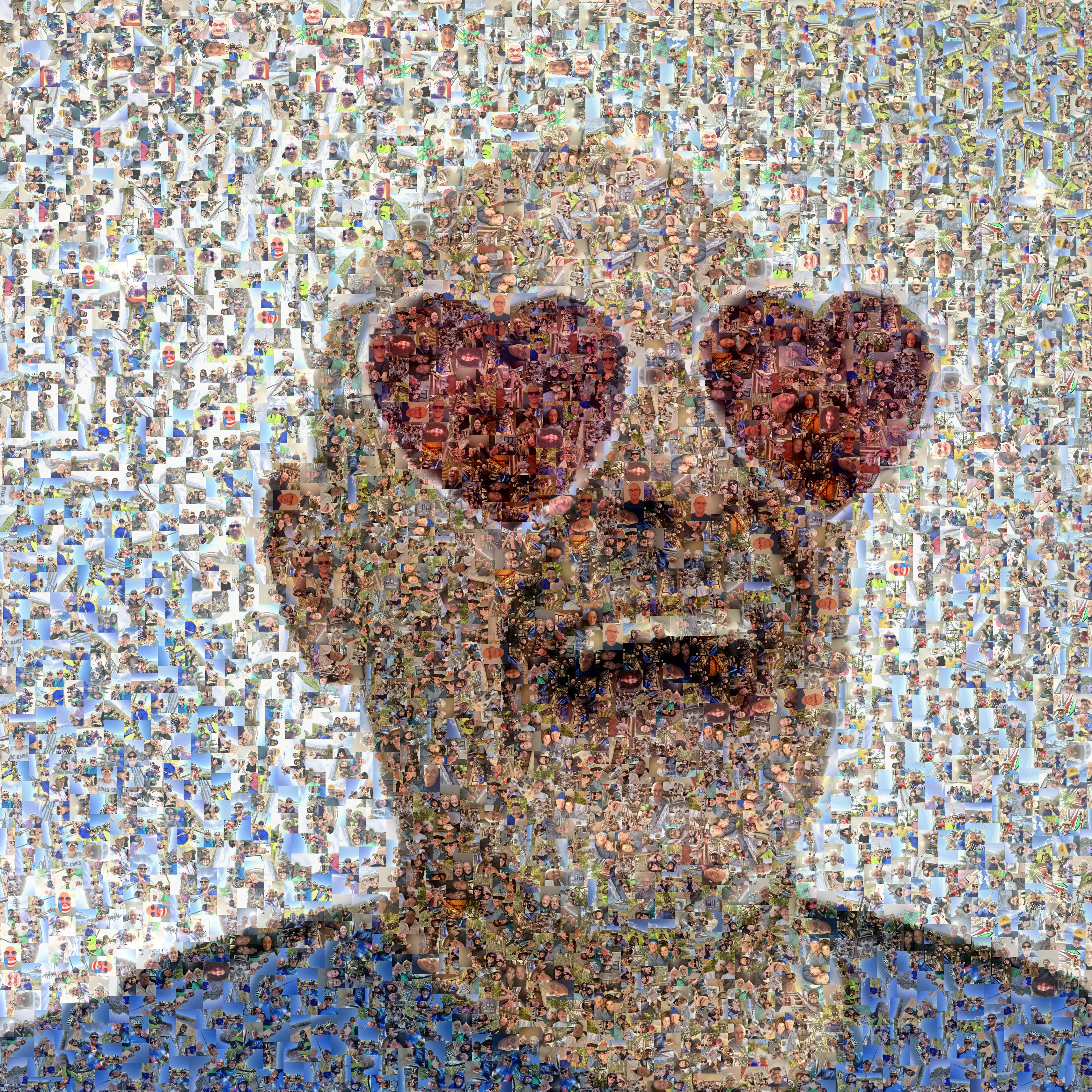
Your brain helps a bunch. Once it figures out you’re looking at a face, it smooths out the imperfections, making the closeup trick where it devolves into individual photos that much more impressive.
Your brain constantly interprets what your eyeballs are taking in. There are over 100 million light receptors in your eyeballs that categorize what you’re looking at by brightness and color (rods and cones). The brain puts it all together.
In digital photos or art, we dumb down our rich organic eyesight into dots and pixels and combinations of Red, Green and Blue.
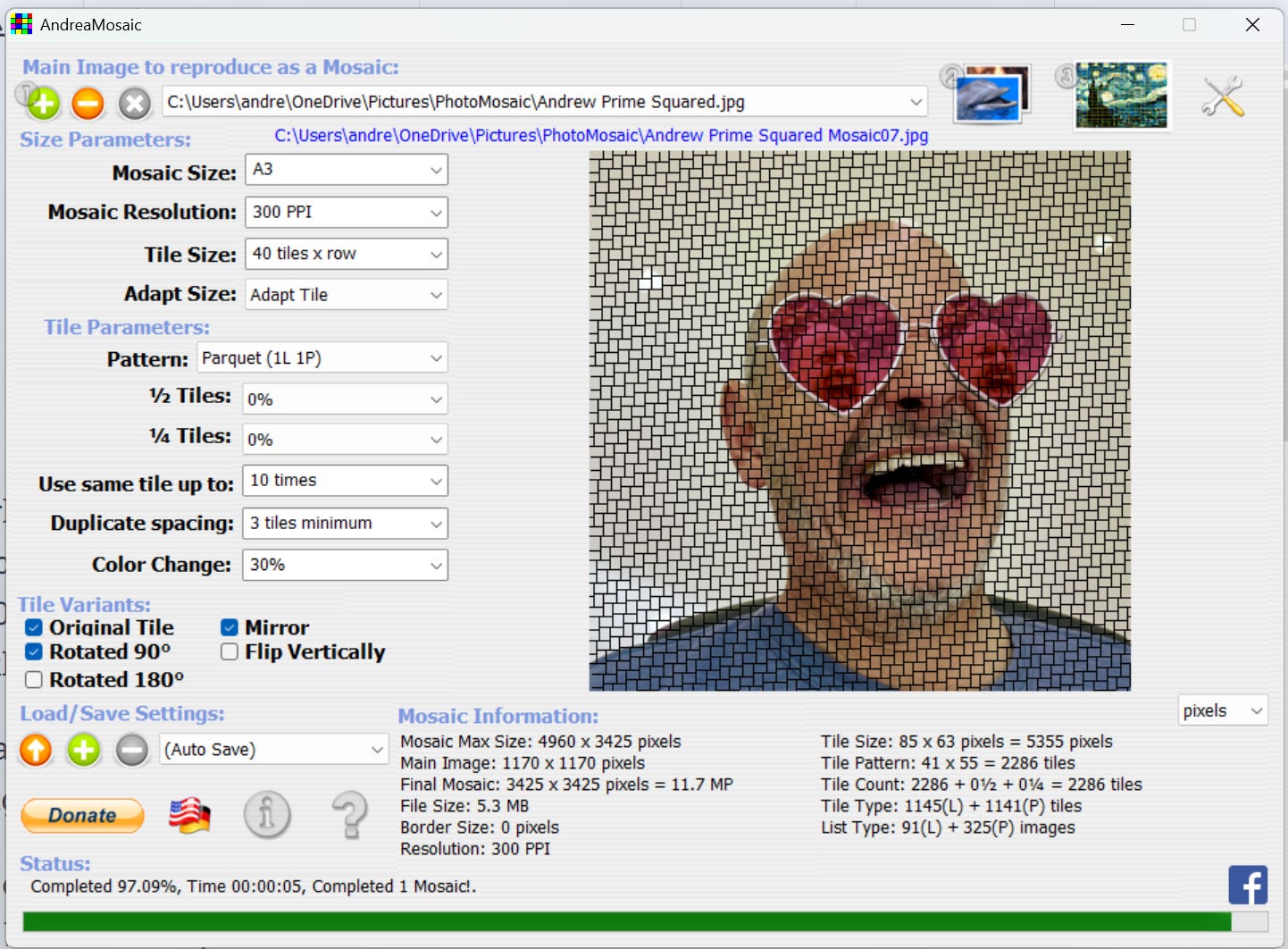
A phone photo is made up of millions of pixels; this photomosaic1 is composed of 2,286 selfies:
Computers have gotten orders of magnitude better at turning dots into pictures. The first game I ever played on a computer had no screen, just a headless teletype banging out lines of text limited to the letters of the alphabet.
After teletypes, the mainframe line printers churned out reams of tractor-fed green bar paper reports, one line at a time.
The first printers of the PC era were dot-matrix. The print head had 24 little pins that fired against a ribbon as it swept back and forth across the page. They were so noisy, we stuck them in elaborate noise-dampening contraptions.
Laser printers came next and they were magical. Virtually silent with the crispest text, a laser scans across an electrostatic drum writing text that’s then sprinkled with the finest black dust (toner) that’s burnt onto paper as it rolls across the drum with a reverse charge.
Then — the worst — and ironically also the best printer tech ever burst on the scene: inkjet printers. If you’ve ever had one of these little buggers you probably hate them as much as I do. HP turned them into a business focused solely on selling you more cartridges. It’s so annoying; printers became disposable and print quality plummeted.
But at the high end, inkjets are capable of reproducing the finest art. They have a fancy, made-up name: Giclée, because who wants to buy an ‘inkjet’ print? Giclée (actually pronounced zhee-KLAY but gee-SLAY is close and I can remember it) is from the French word gicler meaning ‘to squirt.’
Really.
I only recently learned this word, working with several clients who are artists that rely on this tech to make prints of their one-of-a-kind originals.
Lauren Forcella paints the most beautiful things and this weekend we got these two:
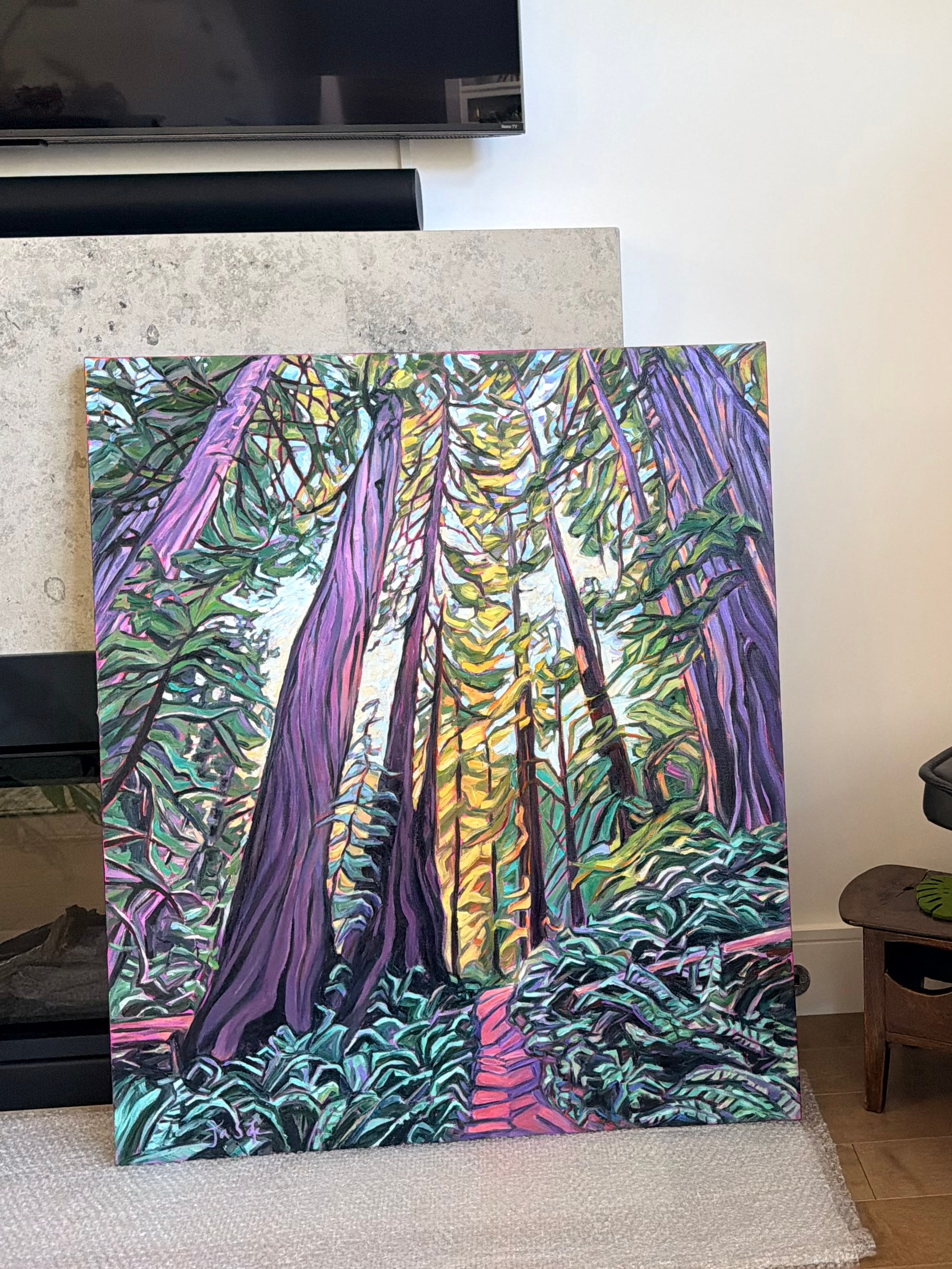
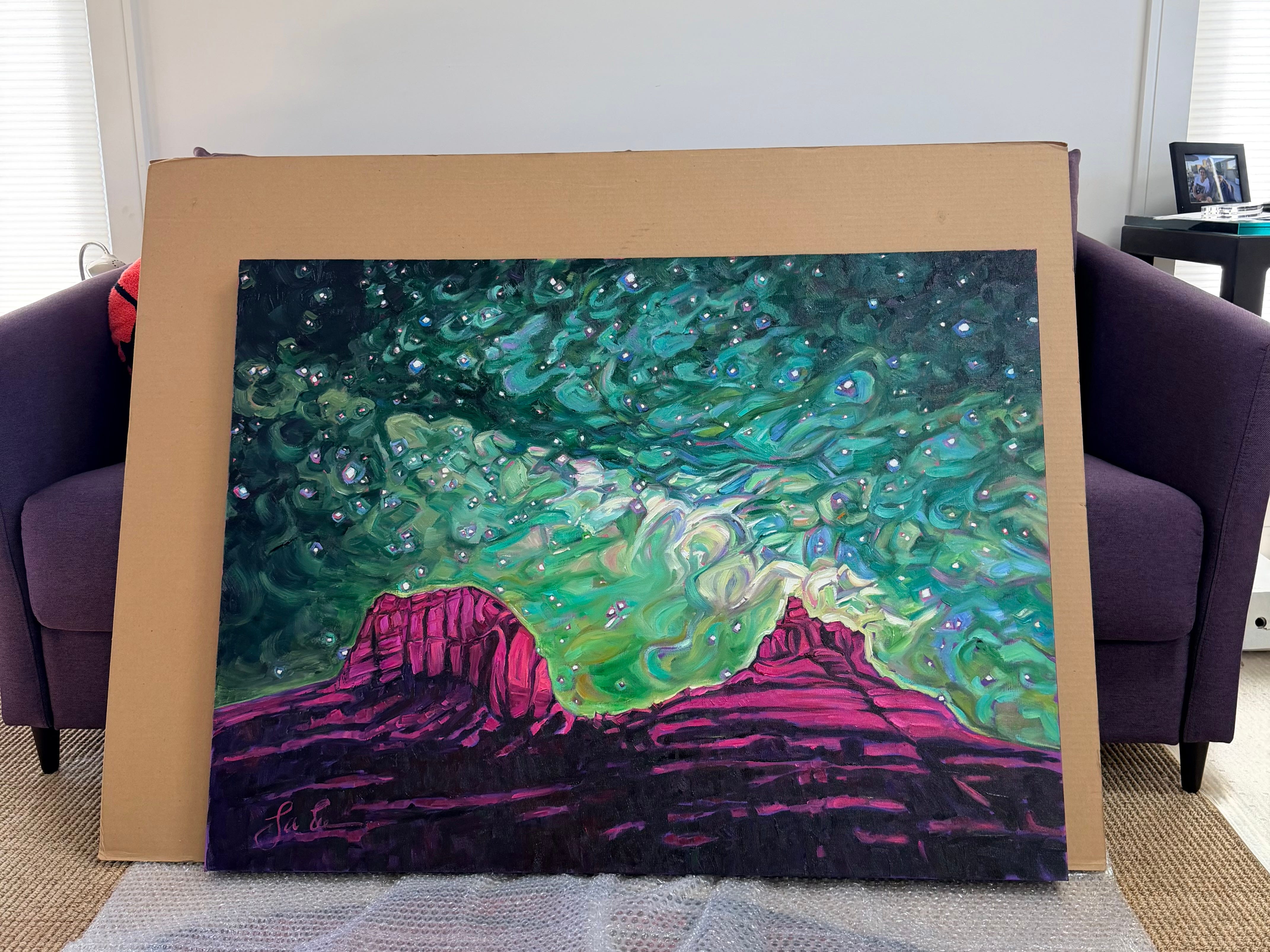
I can’t wait to put them up.
Every time Lauren creates a new painting, she brings it to her printer in Sacramento where he carefully photographs it using a $20K Scanmaster camera mounted opposite a black wall where the painting goes, surrounded by studio lighting. That RAW image then goes through painstaking manual color correction, resulting in an uncompressed archive TIFF2 file.
When a customer orders a print, massive Epson inkjet printers are used to print on canvas or art paper for a reproduction that’s hard to tell from the original, at a fraction of the cost.
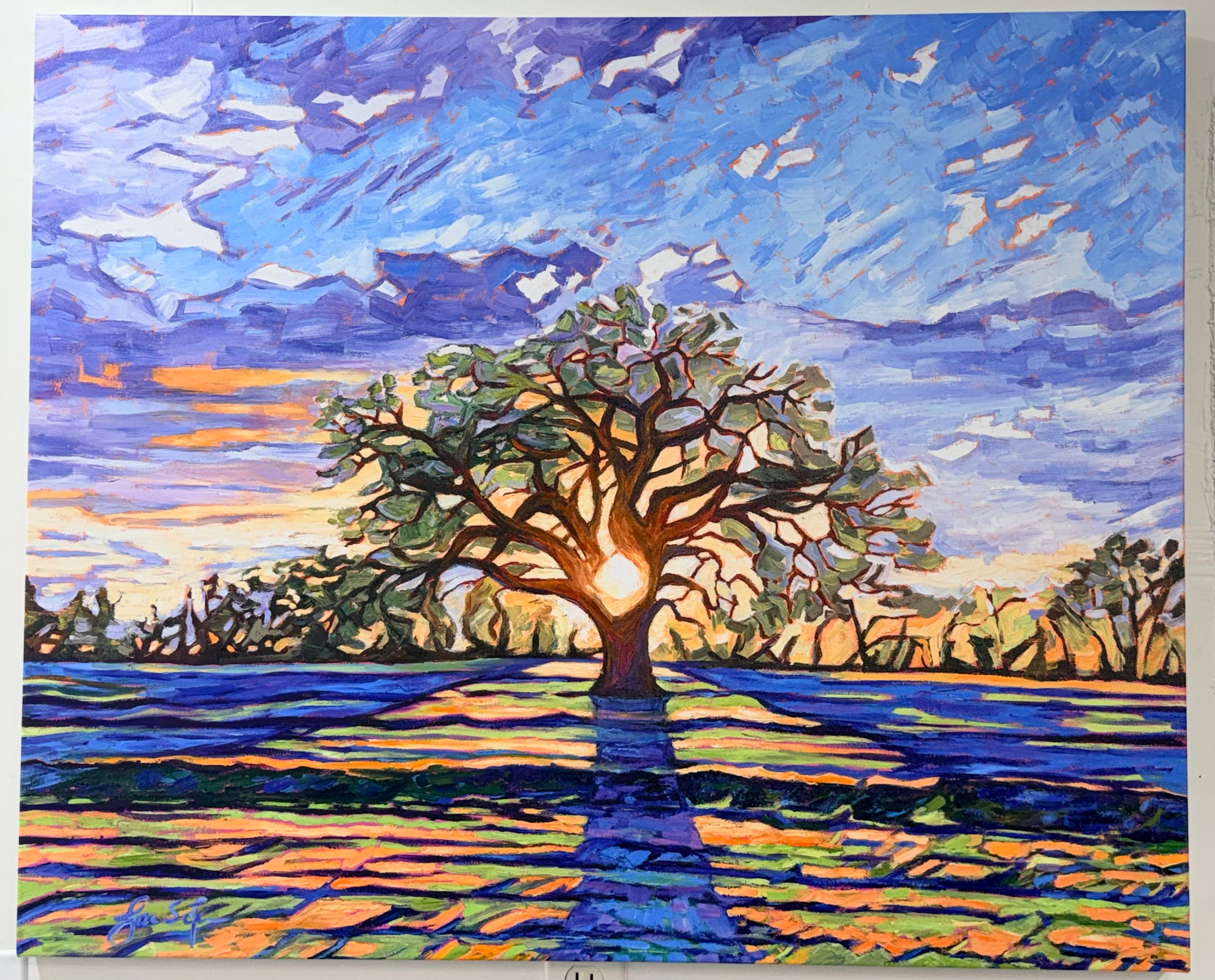
Check out Lauren’s pretty prints site and take a look around while you’re there:
https://prints.laurenforcella.com
This mural at the Charles Schulz Museum is another very cool photomosaic made from Peanuts cartoons https://schulzmuseum.org/press-room/museum-interior-images/
Versus a .JPG on your phone that compressed might be a couple of megs, TIFF image files can be 1000X that at a gig or more.
Hilarious title!! As usual, I learned something and got a laugh in as well. Thank you for including my paintings--and that I also sell giclee prints made of squirts!
We often talk about digital technology as if it makes things less real. But sometimes technology is the thing allowing us to preserve the details that would otherwise disappear. My brother used scanning and digital restoration to save a collection of my mom’s old wedding photos that were deteriorating. I will take photos of the finished product next time I visit. He did an amazing job.
Happy Friday, Andrew.